
Divorce Optimist

Divorce Optimist helps safe parents and relatives stay in their children's lives — and thrive.

If you're afraid of losing contact with your child, you're not alone — and it's not hopeless. The bigger work is changing custody systems worldwide, through prevention, training, and real cases — so no child has to lose someone who loves them.

Every child deserves all safe parents — and all safe relatives.

The work is bigger than any single case.

Every year, millions of children lose meaningful contact with one parent — often not because that parent is unsafe, but because the system has the wrong incentives. The aim is to change that, with care for the families caught in the middle.

Systemic change, worldwide

The main work is changing how custody systems treat the bond between a child and a parent — partnering with policymakers, researchers, and organizations across the globe.

Children's needs come first

A child's safety and real needs — not a pressured "wish" — have to lead every decision. Respecting a manipulated child's "choice" isn't respect; it hands the child to whoever pressures best.

Prevention before harm

Once a bond is already broken, very little can be undone. So the focus is prevention — acting before harm is done, not only when it is already under way.

Education & training

Helping companies and schools support the employees and students going through a separation or divorce — so the people around a child can help, not harm.

Children's needs & safety

A child's needs are not the same as a child's wishes.

"Let children choose which parent to live with from the age of fifteen" sounds respectful. But it quietly starts a race: whoever influences the child first, gets the child. The one who pays the price is the child. It's like allowing smoking from fifteen — it doesn't make the child stronger, it just exposes them to whoever is best at targeting them. And that is exactly what a custody system can be designed to prevent. A child's safety and real needs have to come first — long before any "choice."

This is also why we ask people not to share videos of children online — and why our own awareness videos are clearly marked as AI-generated.

The framework

Some parts of the system can't be won — no matter how reasonable you are.

For a long time I thought I was failing. I was reasonable, I cooperated, I put the children first — and I kept losing ground. Then I understood: there are parts of the system where a normal, reasonable person simply cannot win. Not because they did anything wrong — but because of where they're standing.

I mapped it

Every place where a good parent gets quietly cornered — and every place where the bond can still be saved.

It can change

These broken parts can be fixed — ideally by choice. Because surely no one wants to deliberately damage the future of children, or of the calmer, less aggressive parent.

I call it the Custody Matrix. I'm sharing it piece by piece — follow along as it unfolds.

The Real Catch Me If You Can

As a child, he was asked to choose between his mother and his father. So he ran.

That boy grew up to become the real story behind Catch Me If You Can. At sixteen he was taken to a courtroom and told to choose between his mother and his father. He couldn't. He ran — and never saw his father again. Decades later, Frank Abagnale shares that story here, with one clear message for every parent going through a separation.

No child should ever be asked to choose between their mother and their father.

I hope people in the legal system — judges, lawyers, social workers — will learn from your book and totally understand how devastating to a child the divorce of their parents can be.— Frank Abagnale

Read the interview
Frank Abagnale

Photograph courtesy of Frank Abagnale.

Aleš Pektor

The Story

A father of two who almost lost a child — and turned it around.

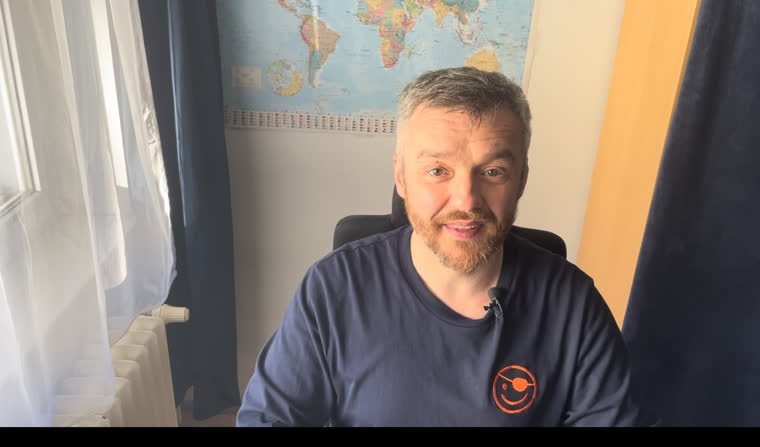
My parents divorced when I was a teenager. Years later my own divorce, in 2014 and finalized in 2016, turned into conflict — and by 2017 I had nearly lost contact with my child; "parental alienation" was written into the official papers. I had a good lawyer and a psychologist, and still I couldn't understand what was really happening. The turning point was meeting someone who had been through it, who helped me finally see the situation clearly. From 2018 the relationship slowly came back. What looked like a horror story became, a few years later, almost a fairy tale: today both parents sit at the same table at our children's milestones. Above all, I'm a father of two.

Where my experience comes from

1,000+

total training days delivered

5 countries

training delivered across five countries, in three languages

4 years

running a global program at a cybersecurity company — where I saw how incentives and digital footprints really shape behaviour

Why change the system — not just raise awareness

My own know-how was enough to save my relationship with my children. But sometimes it isn't — because the system creates utterly perverse conditions, hidden behind nice-sounding words like "we honor the child's participation rights." It's exactly like in Catch Me If You Can, where forcing a child to choose was dressed up as respect for the child. That's why awareness alone isn't enough. I'd rather move the people inside the system to change it — willingly, once they see what they're actually doing — than fight it one case at a time.

Work with me

The first country to modernize its custody system will gain a major advantage.

Less conflict, healthier children, relief for parents — and a model the world follows. This is where I want to direct my work: helping governments, policymakers, and institutions bring their custody systems up to date. If that's your world, let's talk.

Talk to me about your country's system

For companies, schools, and professionals: training and talks on how to protect the child–parent bond and support people going through a separation.

A small number of one-to-one consultations stay open — mainly to keep the work grounded in real cases. If you're facing the loss of contact with your child and want to talk it through, reach out.

How consultations work →