Why No Child Should Be Asked to Choose One Parent Over the Other
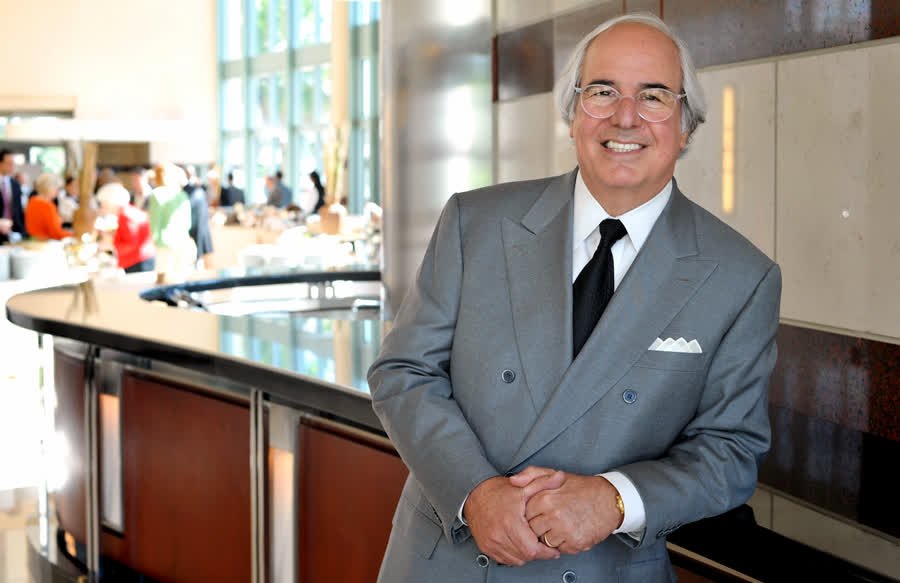
There are many films about divorce. A few of them reveal how harmful it is when children are asked to choose between their parents where the system justifies the decision claiming, “We’re only doing what the child wants.” I don’t know of any more widely watched film based on a true story than Catch Me If You Can. I’m deeply grateful that Frank Abagnale, portrayed by Leonardo DiCaprio in the movie, whose real-life experience inspired the film, agreed to this interview.
About Frank Abagnale
Frank Abagnale is a renowned security consultant and author whose life inspired the Spielberg-directed movie Catch Me If You Can. After serving prison time for fraud committed between the ages of 16 and 21, he started lecturing for the FBI Academy and FBI Field Offices without any compensation and 40+ years later he is still do this and became a leading expert on identity theft and fraud prevention. Today he speaks around the world on these subjects to corporations, financial institutions, government agencies, et. al. He has dedicated much of his life to helping others avoid the mistakes he made, and in this rare interview, he reflects on one of the most pivotal and painful moments of his youth.
About the Interviewer
Ales Pektor is a peer supporter, educator, and founder of DivorceOptimist.com. He went through deep frustration, experienced “parental alienation,” suffered years without bedtime rituals with his children, won custody, and healed the relationships. Today, he supports other parents through peer consultations, courses, and publishing, working to make divorce less painful and to reduce the number of children who lose contact with one parent because of avoidable mistakes.
Opening statement by Mr. Abagnale
Before I start, I have always said that it is absolutely absurd and incorrect when psychologist and educators say that divorce does not affect children.
All you must do is ask any child who has gone through a divorce between their mother and father, and they will tell you it is an absolute lie.
I also want to acknowledge that there are some cases where it is not safe for children to be with one of their parents and divorce may be the only option.
Of course, these children will suffer the effects of divorce but under these circumstances it is for their well-being and safety.
Frank Abagnale
Interview
1. Reliving That Day in Court
• Your story, both in real life and as portrayed in Catch Me If You Can, highlights a critical issue that many children of divorced parents still face today. In the movie Catch Me If You Can, there is a scene where you are asked in court to choose between your mother and father. In your talk at Google (2017) and FedTalks (2013), you described how, at the age of 16, you were suddenly taken from school to a courtroom, where a judge, without even looking at you, asked you to choose between your mother and father. The pressure was so overwhelming that you ran away, and tragically, you never saw or spoke to your father again. When the judge asked you to decide, he never even looked at you. What was going through your mind at that moment?
There was absolutely no way I could pick between my mother and my father. I loved them both and I was concerned of a lifelong resentment from either one if I didn’t choose them.
• If you had been the judge that day, how would you have handled the case differently?
I have said many times that if the judge had taken me into his chambers and carefully explained to me that my parents were getting a divorce but because of my age I had to make a choice as to which parent to live with, but went on to explain to me that I would see both parents and have the opportunity to be with both parents and their care and love for me would not change, I think I would have not made the choice to run away.
2. The Emotional Impact of That Moment
• You never saw or spoke to your father again. What was the most painful part of that for you?
I was serving a federal prison sentence in Petersburg, VA. Because the crimes I committed were done in my youth, the facility I was in was a federal reformatory. I am actually one of the few federal prison inmates who was denied a funeral visit when my father died in an accident while I was serving my sentence. The Federal Bureau of Prisons decided I was too much of a flight risk and that I may cause them embarrassment. My uncle offered to pay for additional guards to take me handcuffed but they still declined. Murderers, rapists, drug dealers have all been given the opportunity to go to the parent’s or immediate family member’s funeral. That hurt me the most as I never go to say good-bye to my dad.
• Do you think your relationships with your parents could have turned out differently if the legal system had handled your case another way?
Answered in the first question second part.
3. Broader Perspective: Avoiding Difficult Decisions
• Your story has had a significant impact on how people understand the challenges of making life-altering decisions at a young age. But beyond that, it has also been used in family courts as an argument against forcing children to choose between parents. I personally want to thank you: during my own custody case, I used a similar argument, and I believe it played a role in ensuring that my children could maintain a strong relationship with both parents. When writing your book and later seeing Catch Me If You Can on screen, did it ever cross your mind that people might use your story in this way?
Not really.
• In the movie Sophie’s Choice, there is a heartbreaking scene where a mother is forced to make an impossible choice which of her two children will live and which will die. Of course, this is a completely different and extreme historical situation, but in a way, as a child, you also faced an impossible choice. To what extent do you think the real issue is that the system allows such questions to be asked at all, putting children (or parents) in positions where they have to make devastating choices?
I never saw “Sophie’s Choice” but no child should ever be asked to make a choice between their mother and their father when a child loves them both and doesn’t want to choose sides.
4. Preventing the Loss of a Parent
• Some parents say things like "I can’t wait until my child is 12 and can finally explain to the court that they want to be with me.” There is a common belief that from a certain age (often around 12, in some countries possibly 15) courts must prioritize the child’s preference. However, what if children don’t truly have a free choice, but are instead influenced by the situation, the environment, or the pressure from one parent? This concern led me to launch DivorceOptimist.com, where I focus on raising awareness about these issues and supporting affected parents. In many aspects of life, children’s preferences are considered but not always followed outright. For example, if a child dislikes a teacher, they are not immediately moved to another class. If a teenager wants something that may not be in their best interest, such as more screen time or an unhealthy diet, adults often step in to guide them. Why do you think that when it comes to custody decisions, a child’s expressed preference can sometimes carry so much weight, even in situations where it might not reflect their long-term well-being?
In most cases of divorce the child is put in a position to chose one parent over the other even if it isn’t in a court situation. The dueling parents use the child and tell them negative things about the other parent and then put the child in the middle. For example, when he’s with the dad, he’s telling the child to tell his mother this or that, while the mother is aggravated by the child taking the dad’s side and then the child is alienated from the mom. This can also work the other way around.
• Many parents do not realize how easily a child can lose connection with one parent after divorce, sometimes permanently. To put this into perspective, in the U.S. alone, approximately 1 million children experience parental divorce each year. Studies suggest that 20 to 40% of them either lose or severely limit contact with one parent, meaning that every year, between 200,000 and 400,000 children in the U.S. alone face this reality. And considering that the world’s population is 23 times larger than the U.S., this could mean that globally, millions (potentially tens of millions) of children experience the same fate every single year. If you could go back in time and talk to your parents the day before the court hearing, knowing everything you know today, what would you say to them?
I would say that I don’t want to choose which parent I want to live with. I want to be able to see and be with them equally so I can share both parents even though they are separated.
• Based on your own experience, if you could advise the key decision-makers responsible for shaping the divorce system (such as lawmakers, family court judges, child psychologists, and social workers) on how to handle cases like yours, what would you recommend?
Those individuals need to make sure both parents are worthy of having custody of their child. They should never alienate the child from one parent or the other and express constantly to the child that they will see and be with each parent.
• This is the first time I am interviewing a globally known person, someone with a wealth of life experience, including decades of volunteer service for the U.S. government. My mission is to ensure that divorce does not become a trauma for children. One of the biggest sources of trauma is when children are forced to choose which parent to keep, and which to reject. In other words, I want to help children avoid facing the same situation you did at 16, when you were asked to choose between your parents. Beyond interviewing you, writing a book, and running educational initiatives, what else do you think I could do to help fine-tune systems so that children are no longer asked to make such a devastating choice?
I believe by you writing the book, it is extremely powerful and when the opportunity arises for you to lecture and be interviewed by media concerning this subject you will get this message out.
• What do you think those reading our interview might do to contribute to this change?
Hopefully parents will think twice about divorce and how it will affect their children for a lifetime. (When I lecture, I have men who are in the 60s and 70s come up to me to tell me they still haven’t recovered from the effects of their parents’ divorce when they were a child and I am one of them.) I hope people in the legal system, judges, lawyers, social workers, etc. will learn from your book and totally understand how devasting to a child divorce of their parents can be.
Once again, thank you so much for taking the time to do this. I firmly believe that by sharing your story, we can help millions of children and parents worldwide.
Final note. I have been married to my one and only wife for 49 years; have three sons and eight grandchildren. I knew the day I married my wife I would never put her or my children through a divorce. I’ve spent my life teaching my children to be good husbands and good fathers and all three have turned out to be just that. Unfortunately, when young children go through a divorce, they often end up getting into trouble thinking that maybe that will bring their parents back together again. Unfortunately, that never works. I committed my crimes between 16 and 21. I have truly never found redemption from others and have lived with others’ concept that once a criminal always a criminal. Unfortunately, no matter what you do to change your life there will always be people that only remember your past. I don’t ever want to see children put into a position where they will go down this road and no matter what they do, they will never be able to amend their mistakes in the eyes of some people.
Final note from the Interviewer, Ales Pektor
I am deeply grateful that Mr. Abagnale has chosen to share this interview by linking to it directly from his official website.
I find this interview extremely important. I am adding its translations to other languages. If you want its translation at your website, please write to mission@divorceoptimist.com that you are interested.
Going through this yourself? See how consultations work →